
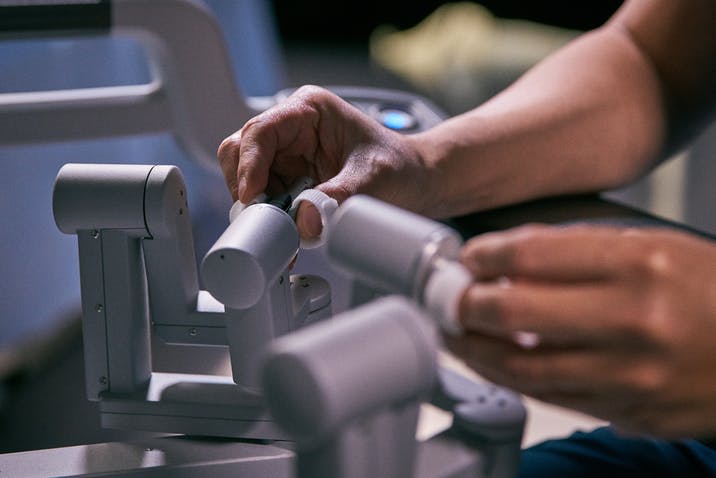
Da Vinci® surgical reconstruction is a robotic-assisted, minimally invasive procedure used to repair pelvic organ prolapse. The surgeon controls robotic instruments that provide enhanced precision, flexibility, and a high-definition 3D view of the surgical area, allowing for accurate restoration of the pelvic organs.
The procedure is commonly recommended for women with moderate to severe prolapse who continue to experience symptoms despite conservative treatments. It aims to improve pelvic support, relieve symptoms, and restore normal function while minimizing surgical trauma and recovery time.
Women experiencing symptoms such as pelvic pressure, a vaginal bulge, urinary leakage, difficulty emptying the bladder, or bowel dysfunction may be candidates for robotic prolapse repair. The procedure is typically considered when pelvic floor exercises, pessaries, or other non-surgical treatments have not provided sufficient relief.
Your healthcare provider will perform a comprehensive evaluation, including a pelvic examination and a review of your medical history, to determine whether Da Vinci® surgical reconstruction is the most appropriate treatment option for your condition and overall health.
Compared to traditional open surgery, Da Vinci® robotic-assisted surgery offers several potential advantages, including smaller incisions, less postoperative pain, reduced blood loss, lower risk of infection, and shorter hospital stays. Many patients are also able to return to their normal daily activities more quickly.
The robotic system allows the surgeon to perform delicate movements with exceptional precision, which may improve surgical outcomes and support a durable repair. However, individual results can vary depending on the severity of the prolapse and other health factors.
Most patients are encouraged to walk shortly after surgery and can usually return home within one or two days, depending on the extent of the procedure and their overall health. Mild discomfort, fatigue, and temporary activity restrictions are normal during the initial healing period.
Recovery generally takes several weeks, and your surgeon will provide specific instructions regarding lifting restrictions, exercise, driving, and returning to work. Attending follow-up appointments and following post-operative care guidelines can help ensure proper healing and the best possible long-term outcome.