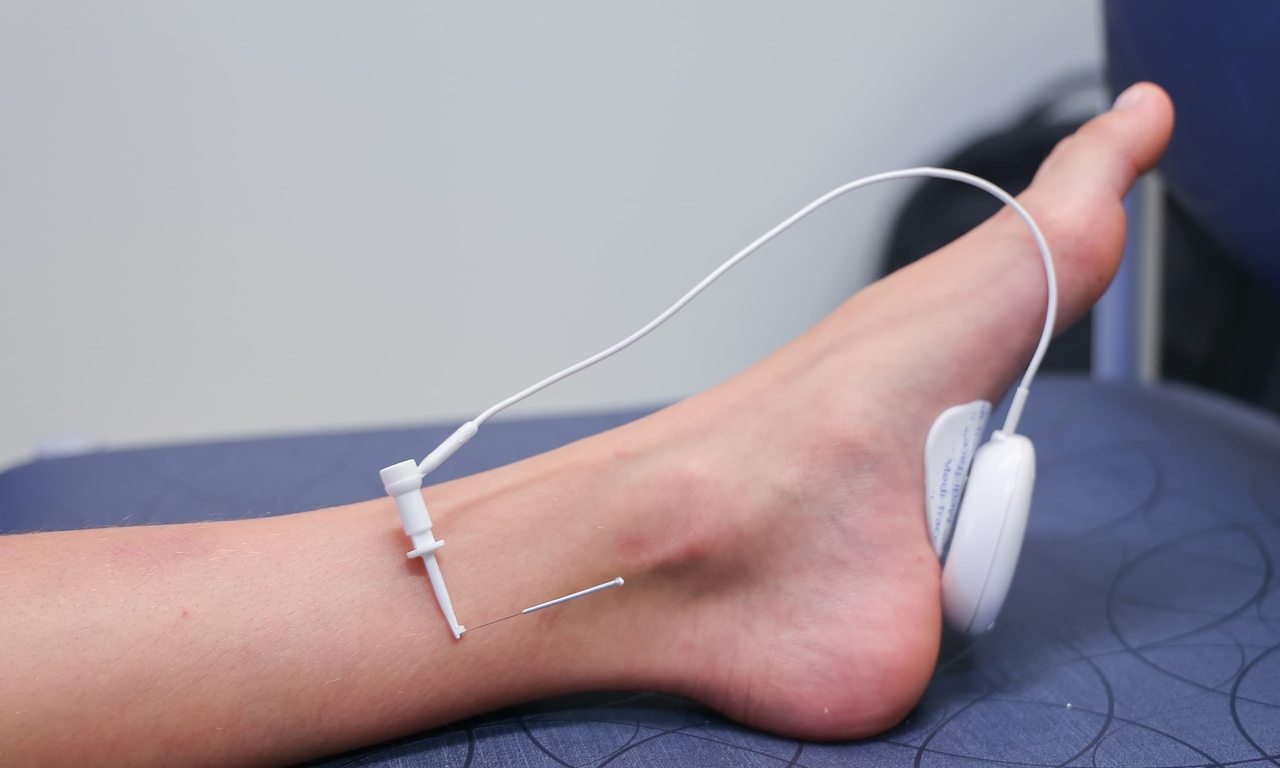
What is Percutaneous Tibial Nerve Stimulation (PTNS)?
PTNS is a non-surgical neuromodulation therapy that uses mild electrical impulses to stimulate the tibial nerve near the ankle. The stimulation travels through nerve pathways connected to the sacral nerves that regulate bladder function. By helping normalize these signals, PTNS can reduce urinary urgency, frequency, and leakage. The treatment is performed in a healthcare provider’s office and usually takes about 30 minutes per session.
Who is a candidate for PTNS?
PTNS may be recommended for patients with overactive bladder, urinary urgency, frequency, or urge incontinence who have not achieved adequate relief from lifestyle modifications or medications. It is often considered for individuals seeking a non-surgical treatment option with minimal side effects. Candidates undergo a thorough evaluation to determine whether PTNS is appropriate for their symptoms. Treatment plans are customized based on each patient’s condition and response to therapy.
What are the benefits of PTNS?
PTNS offers a number of benefits, including a minimally invasive approach, no surgical incisions, and little to no downtime. Many patients experience fewer episodes of urgency, reduced urinary frequency, improved bladder control, and better overall comfort. Because the therapy does not require implanted devices or long-term medication use, it provides a convenient treatment option for many individuals. PTNS can significantly improve quality of life while helping patients regain confidence in daily activities.
What can I expect during and after PTNS treatment?
During treatment, a small, thin needle electrode is placed near the ankle to deliver gentle electrical stimulation to the tibial nerve. Most patients describe the sensation as mild tingling or pulsing and tolerate the procedure well. A typical treatment plan includes weekly sessions for several weeks, followed by maintenance treatments as needed. Patients can return to their normal activities immediately after each session, with no significant recovery period required.