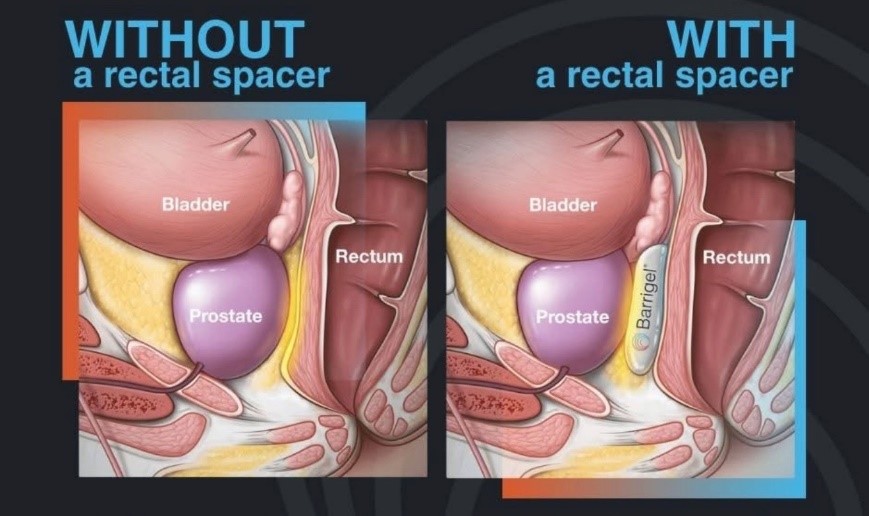
What is a rectal spacer?
A rectal spacer is a biocompatible, absorbable gel that is placed between the prostate and rectum before radiation therapy. The spacer creates a temporary buffer zone that helps reduce the amount of radiation reaching the rectum. This added distance can lower the risk of radiation-related side effects affecting bowel function. The material gradually dissolves and is naturally absorbed by the body after treatment is completed.
Who is a candidate for rectal spacer placement?
Rectal spacer placement is commonly recommended for men undergoing radiation therapy for localized prostate cancer. Patients receiving external beam radiation therapy may benefit from the additional protection provided by the spacer. Eligibility depends on individual anatomy, treatment plans, and overall health. A radiation oncologist and urology specialist can determine whether a rectal spacer is appropriate for a patient’s specific needs.
What are the benefits of rectal spacer placement?
The primary benefit of a rectal spacer is reducing radiation exposure to the rectum during prostate cancer treatment. This can help decrease the risk of bowel irritation, rectal discomfort, bleeding, and other radiation-related side effects. The procedure may also improve patient comfort and quality of life both during and after treatment. By protecting nearby healthy tissue, rectal spacers help support safer and more targeted radiation therapy.
What can I expect during and after the procedure?
Rectal spacer placement is typically performed as an outpatient procedure using imaging guidance for precise positioning. The procedure usually takes a short amount of time and may be performed under local anesthesia, sedation, or anesthesia depending on the treatment plan. Most patients experience minimal discomfort and can return to normal activities shortly afterward. Follow-up imaging is often performed to confirm proper spacer placement before radiation therapy begins.